
The Dynasties of Morocco: A Journey Through Time and Architecture
To walk through the gates of a Moroccan medina is to step out of time and into a living, breathing tapestry of conquest and culture. The air is thick with the scent of roasted cumin and the heavy perfume of orange blossoms, but beneath these sensory layers lies something more profound: the weight of centuries.
Every archway, every intricate tile, and every winding alleyway tells a story of power, prayer, and transition. Morocco is not merely a country; it is the architectural and cultural legacy of various ruling houses that shaped the Maghreb. Understanding the ebb and flow of Morocco's dynasties is the key to unlocking the soul of this North African jewel.
The Idrisid Spark and the Birth of Fes
The story begins with a sense of spiritual purpose and the foundation of a national identity. In the 8th century, the Idrisid dynasty arrived, bringing with them a vision that would merge Arab lineage with Berber strength. This was the era when the fundamental heartbeat of the nation was established, centered in the winding streets of Fes.
As you wander through Fes el Bali, the sounds of metalworkers hammering brass in the distance remind you of this foundational era. The Idrisids didn't just build cities; they built an intellectual and religious epicenter that remains the soul of the country. The narrow, cool shadows of the medina walls feel like a direct connection to those early days of unification.
It was during this period that the concept of the Moroccan state began to crystallize. The mix of tribal loyalty and religious authority created a unique political landscape that would define the region for a millennium. You can still feel that gravity when you stand in the courtyard of the Qarawiyyin, the oldest continuously operating university in the world.
The Desert Empires of the Almoravids and Almohads
Centuries later, the landscape was reshaped by the sheer force of the Almoravids and their successors, the Almohads. These were empires of movement, born from the shifting sands of the Sahara and the rugged peaks of the Atlas Mountains. They were warriors and builders, expanding their reach from the Senegal River all the way to the heart of Andalusia.
The architecture of this era is characterized by a certain austere grandeur—a marriage of desert simplicity and monumental scale. When you stand before the Koutoubia Mosque in Marrakech, you are witnessing the visual language of these empire-builders. The massive, square towers and the geometric precision of the stonework reflect a power that was meant to be eternal.
The transition from the Almoravids to the Almohads represents a shift in both aesthetic and ideology, moving from nomadic roots to highly organized urbanity. This era saw the great irrigation systems and fortified kasbahs that allowed civilization to flourish in semi-arid landscapes. The grit of the desert wind meeting the cool touch of marble in a courtyard is a constant reminder of this duality.
The Marinid Renaissance and Artistic Perfection
If the earlier dynasties were about conquest and expansion, the Marinid dynasty was about the refinement of beauty. Ruling from the 13th to the 15th century, the Marinids turned Morocco into a masterpiece of craftsmanship. They focused their energy on the urban centers, particularly Fes, creating some of the most breathtaking architectural works in the Islamic world.
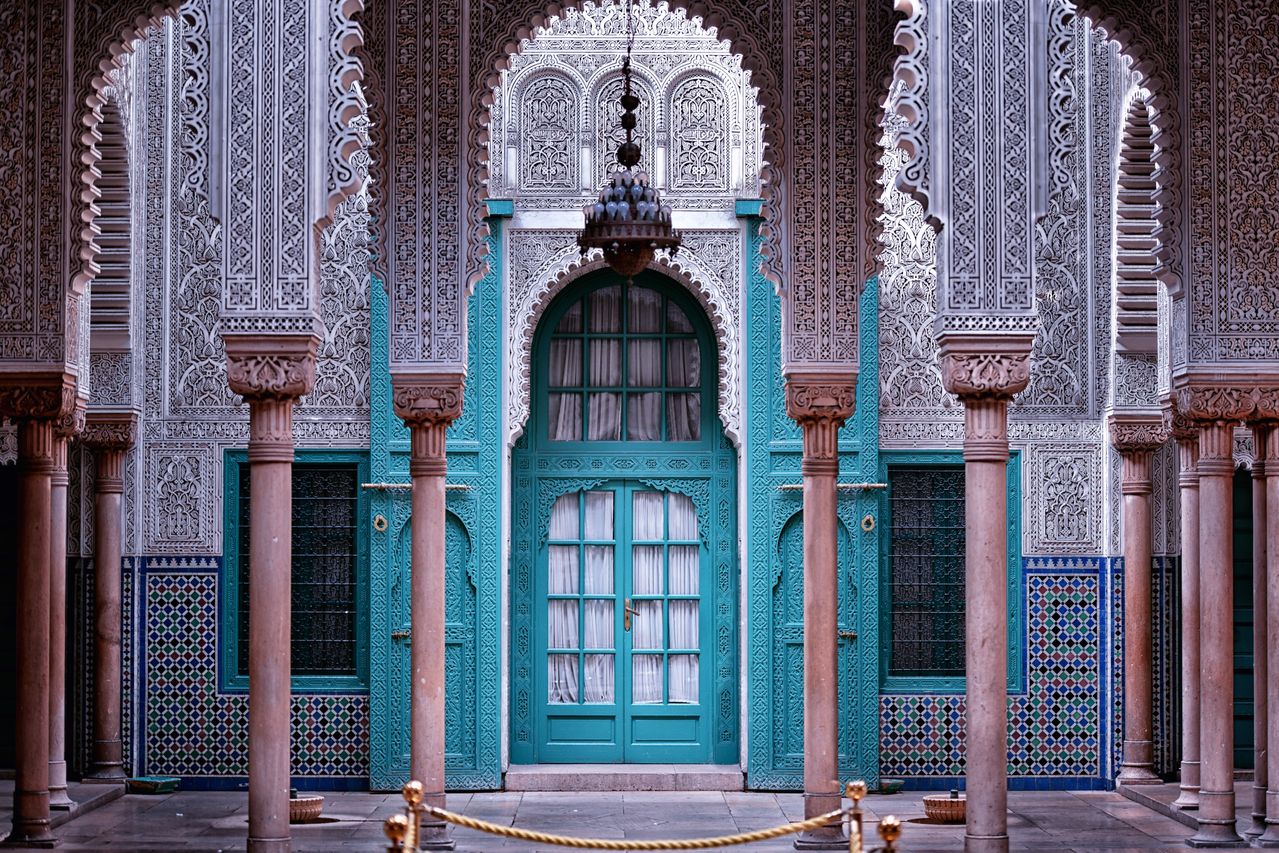
The Marinids perfected the art of zellige—the intricate, hand-cut mosaic tilework that defines the Moroccan aesthetic. Walking into a Marinid-era madrasa, such as the Bou Inania, is a sensory overload of color and geometry. The sunlight filtering through carved cedarwood ceilings casts dancing patterns on the floor, making the very walls seem to breathe with history.
This was a period of intense intellectualism and artistic patronage. The dynasty’s legacy is found in the delicate stucco work and the perfect symmetry of their courtyards. They elevated the Moroccan identity to a level of sophisticated elegance that continues to draw travelers from across the globe to study their handiwork.
The Saadian Splendor and the Golden Age
The rise of the Saadians brought a renewed sense of opulence and a shift in the political center toward Marrakech. This dynasty is often remembered for its wealth, fueled by the gold trade of the south, and its dramatic architectural feats. The Saadian era was a golden age of intrigue, power, and incredible luxury.
The ruins of the El Badi Palace stand as a haunting testament to this vanished grandeur. As you walk through the vast, open courtyards, you can almost hear the echoes of courtly music and the rustle of silk. The sheer scale of the palace, though now weathered, speaks to an era of immense wealth and ambition that once dominated the Maghreb.
The Saadian influence blended North African traditions with the refined tastes of the Andalusian-Moroccan elite. This created a unique aesthetic that was both robust and incredibly decorative. To visit the Saadian Tombs is to walk through a quiet, sacred space where the scent of cedar and the coolness of marble evoke a sense of profound reverence.
The Alaouite Continuity and the Modern Soul
Finally, we arrive at the era that shaped the Morocco we recognize today. The Alaouite dynasty, which has ruled since the 17th century, brought a period of stability and unification that allowed the nation to navigate the challenges of the modern age. They consolidated the territories and preserved the traditional structures while guiding the country through profound change.
The current era is a delicate balance between the deep-rooted traditions of the past and the rapid pace of the 21st century. You see this in the vibrant energy of a modern souk, where traditional weavers work alongside tech-savvy entrepreneurs. The stability provided by the dynasty has allowed Moroccan culture to remain distinct and resilient despite global shifts.
The Alaouite legacy is one of continuity. It is the thread that connects the medieval medinas to the modern coastal cities. When you sit in a contemporary riad, sipping mint tea while overlooking a historic courtyard, you are experiencing the result of this long, complex lineage of leadership.
The history of Morocco's dynasties is not something found only in textbooks; it is etched into the very stone of the cities and the patterns of the rugs. To truly understand the soul of this land, one must walk the paths where sultans once rode and where scholars once debated.
Want to walk through these living museums for yourself? Our team specializes in deep-immersion historical tours that go far beyond the typical tourist paths—reach out and let us plan your journey through time.